
The impact of self-service on staff turnover: how to cut operating costs by up to 10%
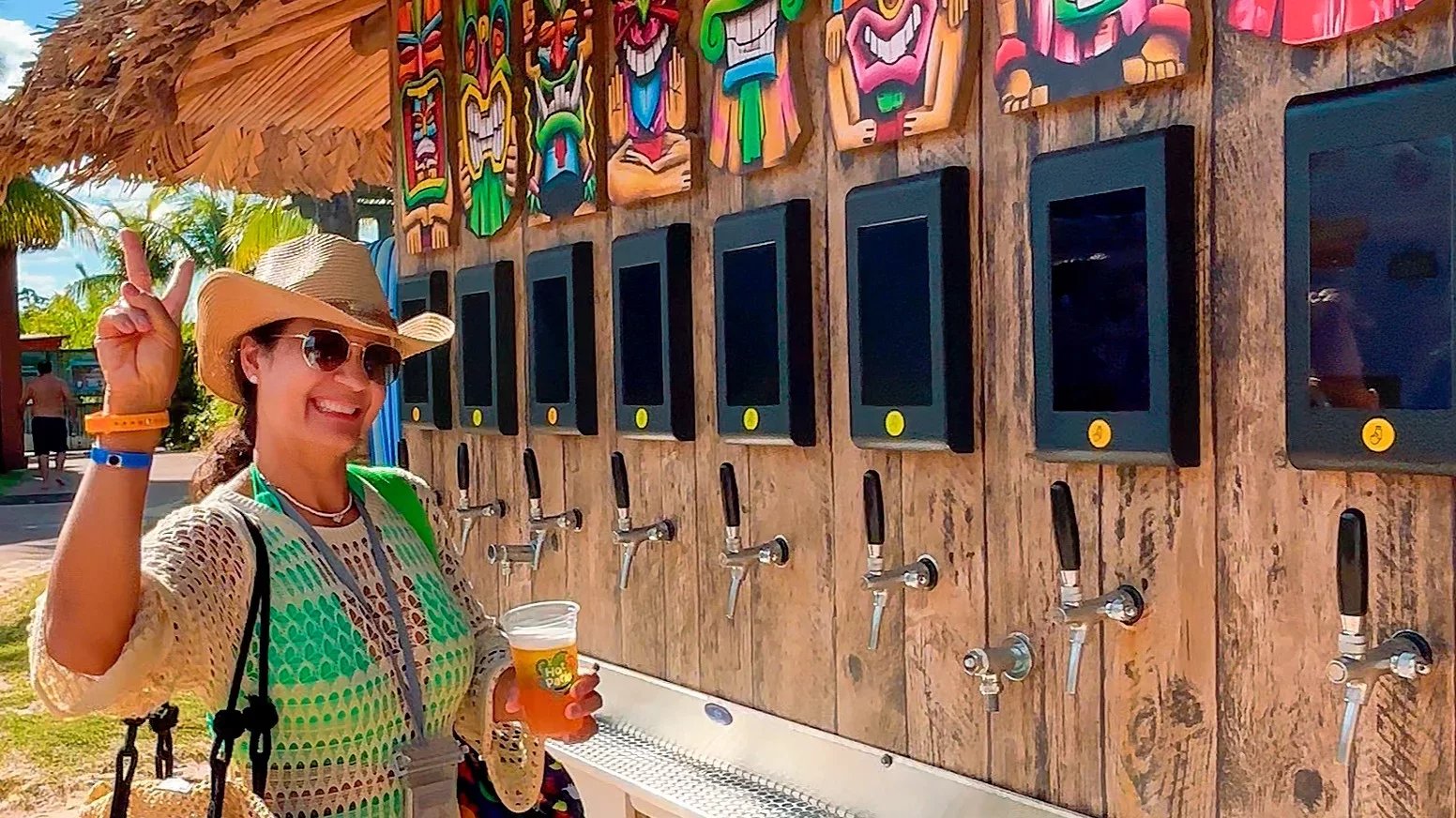
Staff turnover directly affects cost, efficiency and customer experience in high-volume operations. Self-service models reduce reliance on labor for repetitive tasks, lowering exposure to turnover. In practice, this translates into productivity gains and an average reduction of up to 10% in operating costs.
What is operational turnover and why does it affect results?
Turnover is the rate at which employees join and leave an operation. In sectors such as hospitality and food service, this rate can exceed 50% a year, reaching even higher levels in high-demand operations.
Every departure causes three measurable effects:
- Replacement time: recruiting, selection and training
- Productivity drop: adjustment until reaching minimum performance
- Impact on experience: inconsistent service
These factors directly affect margin and operational predictability.
Who is most affected by high turnover?
Operations with these characteristics are under the most pressure:
- High volume of in-person service
- Reliance on repetitive tasks (ordering, payment, delivery)
- Demand that varies throughout the day or week
- Margins squeezed by staff costs
Typical examples include:
- Restaurants and bars
- Food courts
- Events and seasonal operations
- Chains with multiple locations
Where does the traditional model lose efficiency?
Operations built on human scale face a recurring pattern:
- Rushed hiring during peaks
- Shortened training to gain speed
- Teams on a constant learning curve
- More errors and rework
This creates an unstable operating cycle, in which management acts reactively, focused on keeping basic operations running.
How does self-service reduce exposure to turnover?
Self-service shifts operational tasks to technology, especially at three critical points:
- Order entry
- Payment processing
- Pickup/delivery flow
This redesign changes the structure of the operation:
Indicator | Traditional model | With self-service |
|---|---|---|
Reliance on staff | High | Moderate |
Recurring training | Frequent | Reduced |
Operational errors | More common | Less frequent |
Predictability | Low | Higher |
Productivity per person | Limited | Expanded |
The direct effect is a reduction in critical points that depend on people, which lessens the impact of turnover.
What are the practical benefits for the operation?
Adopting self-service delivers observable gains:
- Fewer emergency hires
- Lower ongoing training load
- Higher productivity per employee
- Standardized delivery
- Greater stability during peak periods
These factors contribute to consistent operational efficiency.
How does this translate into lower costs?
The reduction of up to 10% in operating costs comes from a combination of factors:
- Lower investment in recruiting and onboarding
- Fewer unproductive hours
- Less waste from operational errors
- Better allocation of the existing team
This gain does not depend on direct cuts, but on restructuring the operating model.
What becomes the role of management?
With less pressure on execution, management shifts its focus:
- Analyzing consumption data
- Adjusting offer and pricing
- Continuously optimizing the experience
- Operational planning based on real demand
This allows more consistent decisions that depend less on urgency.
FAQ (Frequently asked questions)
Does self-service replace employees?
It reduces the need for staff in repetitive tasks and frees the team for higher-value activities.
How long does it take to see an impact on cost?
The effects start to appear once usage stabilizes, usually within the first few weeks.
Does it work in small operations?
Yes, especially where operational tasks are concentrated.
Do customers adopt self-service easily?
Adoption depends on the experience. Simple interfaces and a clear flow increase usage.
What is the main metric to track?
Operating cost per order and productivity per employee.
Conclusion
High turnover points to a structural dependence on manual processes. Operations that adopt self-service reduce that dependence and gain predictability, efficiency and cost control.
If growing your operation still requires a proportional increase in staff, there is a clear opportunity for a redesign.
Find out how to cut up to 10% of operating costs in your operation. Talk to a specialist and see how to apply self-service in your context.
Subscribe
Subscribe to the myTapp newsletter and get first access to new articles, with actionable insights for those who decide, plan, and run high-traffic businesses.
Recommended posts
Selected content to explore topics such as self-pour beer, customer experience, and operational efficiency, with practical lessons for decision-makers and those who follow market developments.
Capital Moto Week case study: how self-pour beer scaled the operation at a festival of 800,000 people
At the largest motorcycle and rock festival in Latin America, with about 800,000 people over ten days, self-pour beer kept pace with the event's growth without losing control. In the 2026 edition, the volume served rose more than 18% and the number of sales grew almost 29%, while operational efficiency went from 89% to 93%. The case shows how smart taps sustain beverage operations when the crowd arrives in waves.

Self-pour beer at parks and resorts: how to end lines and waste
In high season, the bar line is one of the biggest bottlenecks at a park or resort: visitors give up, miss out on the attractions and the operation loses sales. Self-pour beer ends the wait, cuts beverage service staff by up to 80% and reduces waste from about 15% to 3%, with real-time consumption data for management.
Self-pour draft beer for events: how to end the lines and sell more at festivals
At a festival's peak, the bar line is where revenue slips away. Self-pour draft beer ends the wait, cuts service staff by up to 80% and reduces waste from about 15% to 3%. With real-time consumption data, the operation decides on the spot and sells more at the moment that matters most.

Receive regular updates on new products and industry trends.