
Capital Moto Week case study: how self-pour beer scaled the operation at a festival of 800,000 people
Capital Moto Week case study: how self-pour beer scaled the operation at a festival of 800,000 people
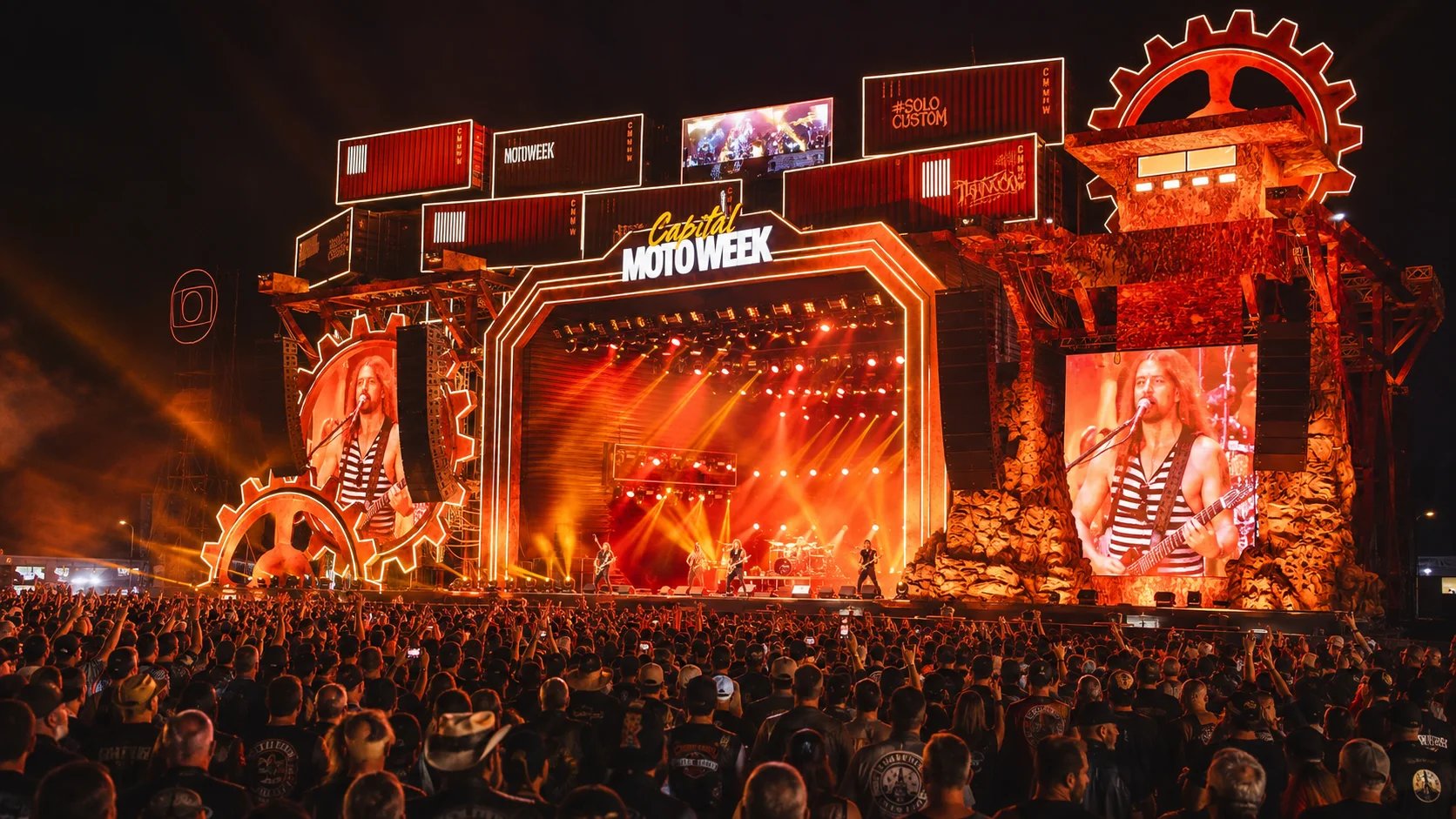
Few environments put a beverage operation to the test like a ten-day festival that brings together about 800,000 people. At Capital Moto Week, the largest motorcycle and rock festival in Latin America, held at Granja do Torto in Brasília, draft beer consumption is not spread calmly across the day. It arrives in waves, at the turn of the night, when the main show ends and a good part of the Cidade da Moto looks for a glass at the same time.
It is at this kind of peak that most bar operations hit their limit. And it was precisely in this scenario that self-pour beer showed its value, sustaining the operation from one edition to the next and improving on the indicators that matter most.
The challenge: serving draft beer at the pace of a festival that never stops
Capital Moto Week runs almost 24 hours a day for ten days. The crowd arrives en masse, consumption concentrates in the early hours of the morning, and the operation has to serve thousands of people in short windows without turning the bar into a waiting funnel.
In a context like this, the traditional service model runs into a well-known ceiling. The more people arrive at the same time, the longer the line, and each minute spent standing in it is a minute in which the audience neither enjoys the festival nor consumes. Solving this only with more staff would be expensive and, within the space of an event bar, nearly unfeasible.
The solution was to remove the bottleneck and let the audience pour for themselves, straight from the tap, with immediate payment. Draft beer consumption at the festival ran through myTapp self-pour points, at Motobar and at Camarote Spaten, where each tap works as an independent point of sale, without depending on the speed of a server to operate.
For myTapp's Head of Expansion, Jean Medeiros, the result came from the combination of technology and positioning. "Self-pour made a difference beyond speed. The points were in strategic locations, next to Motobar and Camarote Spaten, with solid consumption every day and a standout performance from Motobar, which stayed open practically 24 hours", he says. He stresses the weight of integration between the teams: "myTapp and Spaten formed a strong partnership, from the colors to the brand guide, with the set design and the beverage operation in sync. It is this joint work that makes a project of this size succeed."
What the numbers from the 2026 edition show
Comparing the 2026 edition with the previous one, the growth did not come from an isolated peak or from luck. It came from operations, and the main indicators rose consistently:
- Volume of draft beer served: +18.4%. The audience drank more, and the operation delivered that additional volume without stalling.
- Number of sales: +28.6%. Almost a third more individual transactions, which indicates more people managing to pour, and not just each person drinking more.
- Days of operation: increased from seven to ten. The operation was bigger and longer, and efficiency kept pace with that growth.
What separates real growth from inflated growth is the relationship between these numbers. Sales rose more than volume, a sign of an operation that served more people quickly, absorbing peak demand instead of holding it back in a line.
Two environments, two consumption moments
One point that helps explain the result is the way the operation was designed within the event. Instead of a single bar format, the festival worked with two distinct environments, each with its own role.
myTapp's CEO, Mateus Bodanese, describes this logic: "There were two different consumption opportunities within the same event. Motobar was at a crossing point for lots of people, next to a secondary stage that served almost as an opening act for the main arena, with large, constant throughput, practically 24 hours of operation. And there was also the operation inside a VIP box, a more premium space, with a view of the stage and food service, which hosted Ambev guests and the audience of brand activations." For him, different environments converged on the same purpose: "efficiency and intelligence in every moment of the experience and consumption."
This split has a practical reading. A single event brings together very different consumption profiles, and treating them all the same way usually wastes opportunity. The high-throughput point calls for speed; the VIP box calls for experience. Self-pour served both without the operation having to switch technology from one to the other.
Efficiency: the number that reveals the operation's maturity
On myTapp's real-time monitoring dashboard, the operation's efficiency went from 89.3% in the previous edition to 93.1% in 2026. In a draft beer operation, this index reflects how much of the product actually becomes a sale, instead of being lost to foam, imprecise dosing or keg waste. Improving this number while volume and audience grow runs against what usually happens, since more movement tends to bring less control. Here, the movement was the opposite.
The gain has a direct explanation in the self-pour model. Because the system measures and releases every milliliter, the typical waste of eyeballed draft beer, between excess foam and a badly poured glass, practically disappears. Every serving comes out standardized, and what would be a loss becomes delivered product.
Less complexity, more control
Another lesson from the 2026 edition was simplifying the catalog. The operation began working with a lean mix of labels, concentrating consumption on a few high-turnover products instead of a fragmented catalog.
At a festival operation, this choice weighs more than it seems. Fewer items mean less room for error when serving, simpler restocking and an audience that decides faster, which helps keep the pace at peak. It is the kind of decision that only becomes clear when there is data to see what really moves.
And data is something this model has plenty of. Each tap generates its own real-time reading, which makes it possible to track consumption by point of sale and by time of day during the event. For anyone organizing an operation of this size, this raises management to another level: you can move kegs before they run out, understand consumption behavior throughout the early hours and plan the next edition based on what actually happened, not on estimates.
Why this case matters for those who run events
Capital Moto Week is a test under extreme conditions. A self-pour beer system that can handle a festival of this size, with consumption concentrated in the early hours and ten days in a row of operation, can handle practically any event.
What the case proves is that, in a large-scale beverage operation, technology is not a luxury but what allows you to grow without losing control. It sustained more volume, more sales and more efficiency at the same time, in one of the most demanding environments a bar can face.
Building an operation like this, capable of absorbing intense crowd peaks without turning into a line, is the focus of myTapp FAST, the self-pour line that myTapp designed for high-speed, high-volume events. myTapp is the Brazilian Beertech behind more than 6,000 smart taps monitored in real time, present at festivals, bars, parks and resorts in Brazil and in more than ten countries.
If you organize events and want your draft beer operation to grow along with the audience, with no lines and no waste, discover the myTapp solution for Events and Festivals.
Frequently asked questions
How does self-pour beer work at a large festival like Capital Moto Week?
The audience pours straight from the tap and pays on the spot, by card or wristband. Each tap is an independent point of sale, which makes it possible to serve many people in parallel at peak, without depending on the speed of staff.
Can self-pour handle the consumption peaks of a ten-day event?
Yes. At Capital Moto Week, with consumption concentrated in the early hours and almost nonstop operation, the model sustained an increase of more than 18% in draft beer volume and almost 29% in the number of sales compared with the previous edition.
Does self-pour improve operational efficiency?
Yes. Because the system measures and releases every milliliter, waste drops significantly. In the Capital Moto Week case, operational efficiency went from 89.3% to 93.1% from one edition to the next, even with a bigger event.
Can consumption be tracked in real time during the event?
Yes. Each tap generates its own reading, which makes it possible to track volume by point of sale and by time of day during the event, move inventory and plan future editions based on real data.
Subscribe
Subscribe to the myTapp newsletter and get first access to new articles, with actionable insights for those who decide, plan, and run high-traffic businesses.
Recommended posts
Selected content to explore topics such as self-pour beer, customer experience, and operational efficiency, with practical lessons for decision-makers and those who follow market developments.
Capital Moto Week case study: how self-pour beer scaled the operation at a festival of 800,000 people
At the largest motorcycle and rock festival in Latin America, with about 800,000 people over ten days, self-pour beer kept pace with the event's growth without losing control. In the 2026 edition, the volume served rose more than 18% and the number of sales grew almost 29%, while operational efficiency went from 89% to 93%. The case shows how smart taps sustain beverage operations when the crowd arrives in waves.

Self-pour beer at parks and resorts: how to end lines and waste
In high season, the bar line is one of the biggest bottlenecks at a park or resort: visitors give up, miss out on the attractions and the operation loses sales. Self-pour beer ends the wait, cuts beverage service staff by up to 80% and reduces waste from about 15% to 3%, with real-time consumption data for management.
Self-pour draft beer for events: how to end the lines and sell more at festivals
At a festival's peak, the bar line is where revenue slips away. Self-pour draft beer ends the wait, cuts service staff by up to 80% and reduces waste from about 15% to 3%. With real-time consumption data, the operation decides on the spot and sells more at the moment that matters most.

Receive regular updates on new products and industry trends.