
Beverage telemetry: how to make sure cashless doesn't stop your operation
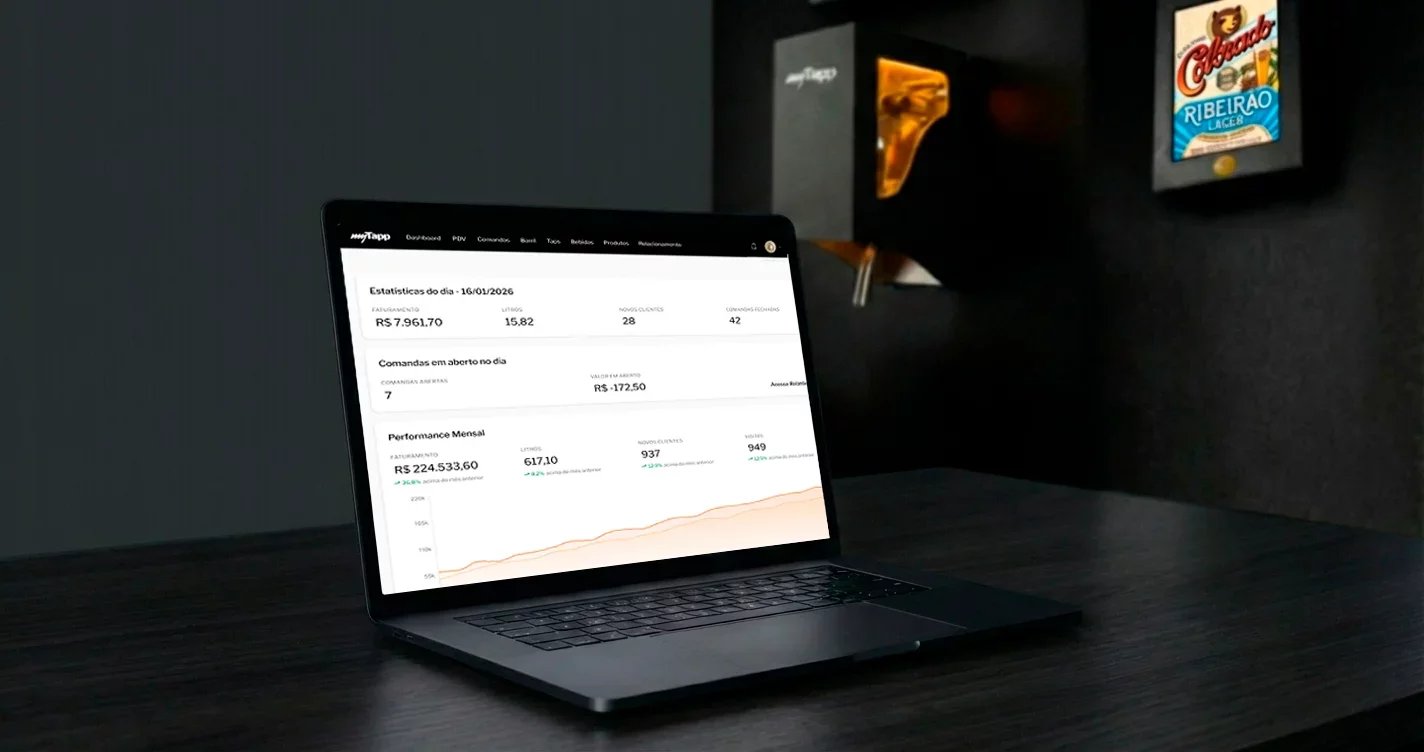
Cashless systems speed up payment, but they do not guarantee operational continuity. Beverage telemetry adds real-time visibility into consumption and inventory, enabling decisions during the event. The combination reduces stockouts, improves flow and protects the revenue captured.
What is the limit of cashless at events and resorts?
Cashless works at the transaction layer. It reduces payment time and increases service capacity.
This gain changes how the operation behaves. Consumption speeds up, and the pressure on inventory and staff rises in the same proportion.
Without real-time data, management loses its ability to respond.
Direct effect on the operation:
- High-demand points run out of stock without warning
- Teams react late
- Lines reappear due to lack of product, not because of payment
- Part of the demand is no longer converted into revenue
What is “blind cashless”?
Blind cashless describes operations that process payments efficiently but do not monitor the consumption flow in real time.
Decisions depend on perception or manual communication. Adjustments happen after the impact.
How does telemetry close this gap?
Telemetry creates a continuous layer of data on consumption.
Each serving generates operational information that makes it possible to answer three critical questions:
- Where demand is concentrated
- Which product is accelerating
- When inventory is at risk
This data is updated continuously and guides decisions during the event.
How does the integrated flow (cashless + telemetry) work?
1. Faster payment
The customer completes the purchase with low friction.
2. Automatic consumption recording
Each serving is captured accurately.
3. Real-time reading
The system identifies patterns and variations:
- Demand peaks
- Performance differences between points
- Stockout trend
4. Immediate operational action
The team makes adjustments based on the data:
- Relocating kegs
- Redistributing staff
- Activating new points
- Preventive technical intervention
Practical example: operation without telemetry
Scenario: high-volume event with payments flowing.
Operational dynamics:
- A point runs out of stock with no visibility
- Demand shifts to other bars
- Service time increases
- Part of the audience gives up on buying
Impact:
- Revenue not captured
- Inconsistent experience
- Pressure on staff
Practical example: operation with telemetry
Scenario: same event, with real-time data.
Operational dynamics:
- The system identifies a rise in consumption at a specific point
- Early stockout alert
- The team redistributes inventory before the impact
Impact:
- Continuous flow
- Revenue preserved
- More predictable operation
Operational comparison
Criterion | Cashless alone | Cashless + Telemetry |
|---|---|---|
Payment speed | High | High |
Consumption visibility | Limited | Real time |
Stockout prevention | Reactive | Proactive |
Inventory management | Manual | Data-driven |
Operational continuity | Unstable at peaks | Stable |
Revenue capture | Partial at peaks | Maximized |
Why this redefines event infrastructure
The operation stops depending exclusively on manual execution and starts running on continuous data.
The infrastructure takes on an active role:
- Measures what is happening
- Shows where to act
- Supports decisions during the event
This model reduces operational uncertainty and increases control over results.
Which benefits are measurable?
- Reduced losses from stockouts
- Increased revenue captured at peaks
- Better staff allocation
- Greater consumption predictability
Priority use cases
- Festivals with multiple points of sale
- Resorts with consumption that varies throughout the day
- Arenas with concentrated peaks
- Operations that require real-time measurement
FAQ — Frequently asked questions
1. Does cashless solve the whole operation?
It solves payment. The operation still depends on managing consumption and inventory.
2. Does telemetry replace cashless?
No. It acts as a complementary layer of operational control.
3. What is the gain from integrating the two?
Keeping sales flowing even under high demand.
4. Does the team need to change its process?
The operation stays the same, with decisions guided by data.
5. How do I measure the return?
By comparing loss, stockout and captured sales indicators.
How to implement
- Map the consumption points
- Integrate the existing cashless system
- Install telemetry sensors
- Define operational indicators
- Train the team to read the data
- Monitor and adjust continuously
Talk to the myTapp team
If your operation already uses cashless, the next step is to make sure the sales flow is not interrupted by a lack of visibility.
The MyTapp team can analyze your current scenario and identify where the operational losses and the opportunities to gain from real-time data are.
→ Talk to our sales team and request an operational assessment
Subscribe
Subscribe to the myTapp newsletter and get first access to new articles, with actionable insights for those who decide, plan, and run high-traffic businesses.
Recommended posts
Selected content to explore topics such as self-pour beer, customer experience, and operational efficiency, with practical lessons for decision-makers and those who follow market developments.
Capital Moto Week case study: how self-pour beer scaled the operation at a festival of 800,000 people
At the largest motorcycle and rock festival in Latin America, with about 800,000 people over ten days, self-pour beer kept pace with the event's growth without losing control. In the 2026 edition, the volume served rose more than 18% and the number of sales grew almost 29%, while operational efficiency went from 89% to 93%. The case shows how smart taps sustain beverage operations when the crowd arrives in waves.

Self-pour beer at parks and resorts: how to end lines and waste
In high season, the bar line is one of the biggest bottlenecks at a park or resort: visitors give up, miss out on the attractions and the operation loses sales. Self-pour beer ends the wait, cuts beverage service staff by up to 80% and reduces waste from about 15% to 3%, with real-time consumption data for management.
Self-pour draft beer for events: how to end the lines and sell more at festivals
At a festival's peak, the bar line is where revenue slips away. Self-pour draft beer ends the wait, cuts service staff by up to 80% and reduces waste from about 15% to 3%. With real-time consumption data, the operation decides on the spot and sells more at the moment that matters most.

Receive regular updates on new products and industry trends.