
Seven ways sommeliers increase the average ticket in self-pour beer

When we talk about self-pour draft beer, technology gives customers the freedom to choose and pour their own glass. But behind that freedom there is something more that separates the bars that sell well from those that make self-pour a truly profitable experience. And, as surprising as it may be, the secret has a name: sommeliers.
The routine of a self-pour bar usually revolves around efficiency and autonomy. But what if you add specialized knowledge to the automated system? It is more than filling glasses; it is turning each customer choice into a smart sale, guided by recommendations, incentives and discoveries. In this scenario, myTapp stands out, offering smart solutions that combine technology and personalization, bringing more flavor (and value) to your business.
Sommeliers do not just serve draft beer, they serve experiences that sell.
1. Personalized recommendations and accurate suggestions
When we think of self-pour, we picture the customer alone in front of the taps, right? But the sommelier's role changes the game: they observe the profile of the crowd, understand each person's taste, and make precise style recommendations, from the classic pilsner to the bold double IPA.
In practice, this directly affects the average ticket. The sommelier can suggest the most exclusive beer on the menu, something nearly craft, that costs a bit more but brings a superior value proposition. These recommendations, when based on knowledge and a brief conversation, have real power: they lead to choices with higher added value.
The myTapp platform even lets you attach information about each label, pairings and tasting notes that make the sommelier's work much more efficient. This translates into better-informed recommendations and sales with higher margins.
2. Creative pairings and cross-selling
The sommelier also shines when proposing pairings. Imagine suggesting a Weiss draft beer to go with that artisanal sausage appetizer, or a Stout to accompany sweet desserts. This tip, simple in theory, gets the customer to consume more than one category; in practice, it is pure cross-selling.

This encouragement to combine raises the average ticket without being pushy. No one feels pressured, just invited to a new experience.
The myTapp digital menu, for example, has room for a description of each dish, and that is where sommeliers include the pairing suggestions between the establishment's foods and beers.
3. Customer education: demystifying styles and ingredients
Many people still feel unsure in the face of the variety of craft beer or little-known styles. The sommelier educates, explains differences, and with each clarification breaks down barriers. Customers taste something they would not have ordered on their own, pay more for it and, if surprised, order it again.
With myTapp you get tools, such as consumption reports, that track the audience's level of engagement with each style. You can identify trends and prepare the team to give customers that little nudge on their glass, always naturally.
Have you noticed how common it is for customers to try a small sample just out of curiosity? If the sommelier's explanation excites them, it quickly becomes a full glass sale. And in this respect, customer loyalty gains strength, because trying something new makes the consumer create a memory of that moment.
4. Exclusive experiences and special events
Another interesting point is how sommeliers create moments. Guided tastings, themed afternoons and events launching new styles. All of this reaches another level when aligned with self-pour, because the sommelier can go from tap to tap, presenting labels and telling stories.
These events usually have a higher average ticket, since they include combos, experimental pours and bundled sales with premium appetizers. myTapp offers detailed reports that help choose the most appealing styles and, consequently, the events that move the most cash.
Special events sell more because they sell a feeling, not just a product.
Oh, worth remembering: many competitors bet only on pure self-service, with no integration with differentiated experiences. And here myTapp has the edge, because it combines technology with human service to create unique offers.
5. Using rankings and gamification in self-pour
Turning consumption into a game works. Customers love seeing their name climb the ranking. The sommelier, in turn, can encourage them (always ethically, of course), saying how much is left to move up a position or win a symbolic medal. Small challenges and personalized goals, "By the way, did you know that if you try just one more style you're already in the week's Top 5?", completely change the bar's dynamic.
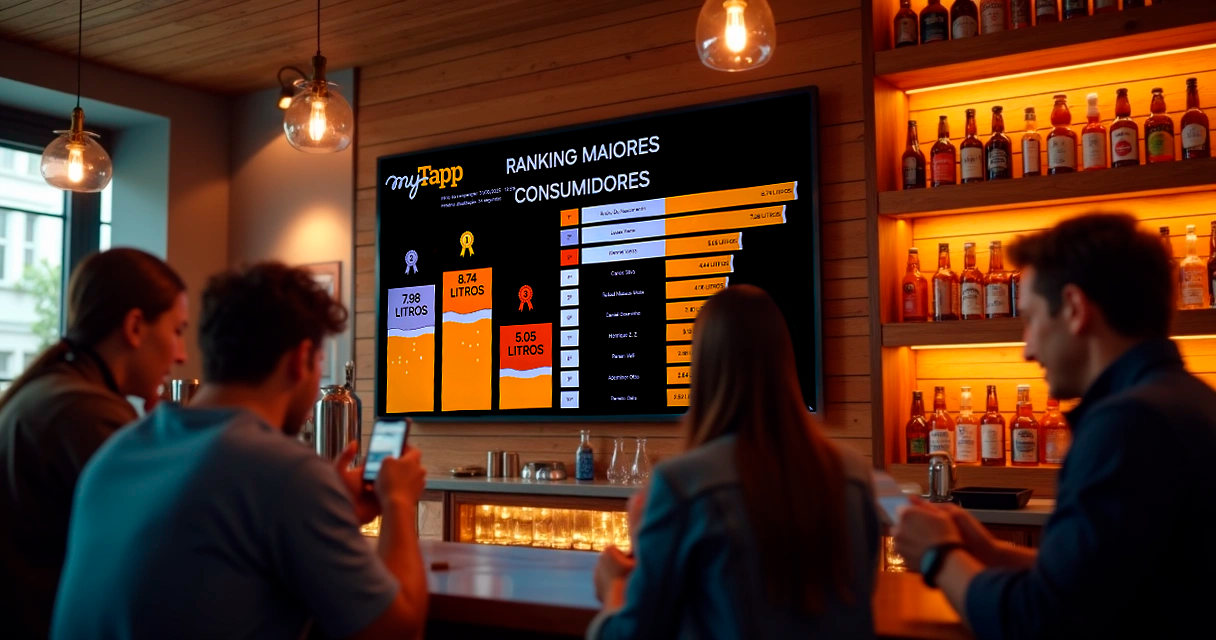
At myTapp, the Ranking is automatic and transparent: it integrates consumption from the app, shows the competition in real time and encourages larger purchases, all in a fun and healthy way. The result is not limited to volume: engaged customers spend more because they want to join in the game.
If you want to learn more about the impact of strategies to keep the bar busy, check out our content on how to keep the bar always full. Increasing foot traffic is not always enough; improving the average ticket is just as relevant, or more.
6. Training that spreads knowledge to the whole team
Even in self-pour, many bars have a support team, if only to restock, clean or answer questions. The sommelier can then be a multiplier: training the team to answer questions, clear up customers' small doubts and apply subtle approach techniques.
7. Smart consumption monitoring and real-time adjustments
Finally, what separates a good sommelier from an excellent one is constantly watching the movement in the bar. By seeing the pace of consumption, the times of day, and the styles that stop selling or start to take off, it is possible to suggest flash promotions, small tastings or even surprise customers with strategic freebies.
Here comes another competitive advantage of myTapp: the system shows detailed reports, alerting when a draft beer style is starting to sell less or when the average per customer has dropped compared to the night's peak. That way, the sommelier adjusts course while the customer is still in the house, takes advantage of peaks of excitement and creates campaigns that are only possible with real-time data.
These quick interventions, such as making a certain tap the "star of the night" or offering a double at slower times, keep revenue up without resorting to across-the-board discounts.
Conclusion: combining knowledge and technology is the way
The role of the sommelier in self-pour bars has changed. It is no longer restricted to the glass or the counter; they act as a journey guide, maximizing sales with every pour. myTapp technology steps into this dance to record each choice, suggest at the right moment and make everything more intuitive, both for those who sell and those who buy.
If you still have questions about how myTapp works or think that selling draft beer depends only on a good price, it is worth catching up; on our blog we also explain why sell draft beer and how to sell even better.
Turn your self-pour system into a spectacle of experiences and profit. Discover myTapp.
Subscribe
Subscribe to the myTapp newsletter and get first access to new articles, with actionable insights for those who decide, plan, and run high-traffic businesses.
Recommended posts
Selected content to explore topics such as self-pour beer, customer experience, and operational efficiency, with practical lessons for decision-makers and those who follow market developments.
Capital Moto Week case study: how self-pour beer scaled the operation at a festival of 800,000 people
At the largest motorcycle and rock festival in Latin America, with about 800,000 people over ten days, self-pour beer kept pace with the event's growth without losing control. In the 2026 edition, the volume served rose more than 18% and the number of sales grew almost 29%, while operational efficiency went from 89% to 93%. The case shows how smart taps sustain beverage operations when the crowd arrives in waves.

Self-pour beer at parks and resorts: how to end lines and waste
In high season, the bar line is one of the biggest bottlenecks at a park or resort: visitors give up, miss out on the attractions and the operation loses sales. Self-pour beer ends the wait, cuts beverage service staff by up to 80% and reduces waste from about 15% to 3%, with real-time consumption data for management.
Self-pour draft beer for events: how to end the lines and sell more at festivals
At a festival's peak, the bar line is where revenue slips away. Self-pour draft beer ends the wait, cuts service staff by up to 80% and reduces waste from about 15% to 3%. With real-time consumption data, the operation decides on the spot and sells more at the moment that matters most.

Receive regular updates on new products and industry trends.