
How to work with draft beer efficiently: a practical guide for bars and restaurants
Anyone who has had to choose a system for serving draft beer knows how many questions come up. Every detail matters, from the type of event to the expected volume, from the customer experience to the physical space available at the venue. I confess: the subject goes well beyond the shiny surface of the taps.
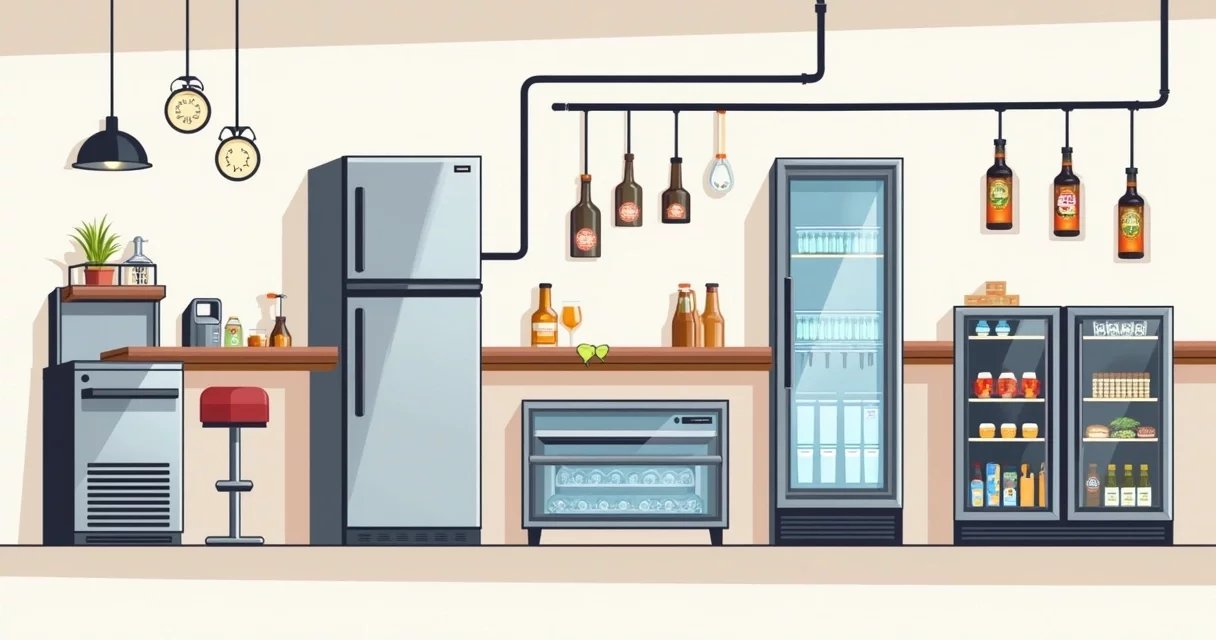
In this article, I will present the main refrigeration systems available for serving draft beer: the electric draft beer dispenser, the cold room, the kegerator, and the refrigerated counter. I will cover the characteristics of each model, its strengths, precautions, limitations, and differences in the day-to-day of bars and events. I have written it all in a clear, light way, with a touch of real experience from someone who lives the backstage of festivals or the buzz of street bars. And every now and then I mention innovative solutions, such as those developed by myTapp, to show how technology can expand what is possible.
Flavor and experience depend on what happens out of the customer’s sight.
Choosing the ideal draft beer system: the financial impact of the choice
When selecting a system for serving draft beer, it is essential to understand that each model has specific characteristics that can directly affect your establishment’s profits and losses. An unsuitable system can lead to wasted product and higher operating costs, hurting the profitability of the business. For example, the electric draft beer dispenser can be an economical option for small events, but its limited capacity and the need for kegs that are already chilled can cause losses if not well managed. By contrast, the cold room, although it requires a larger initial investment, offers better temperature control and less waste, which can translate into long-term profits. So the choice of system affects not only the quality of the beer served but also the economic efficiency of the operation and customer satisfaction. In this article, we will cover the different options available, starting with the electric draft beer dispenser, which is often the favorite at events and parties, but which must be used with caution to avoid losses.
How the electric draft beer dispenser works
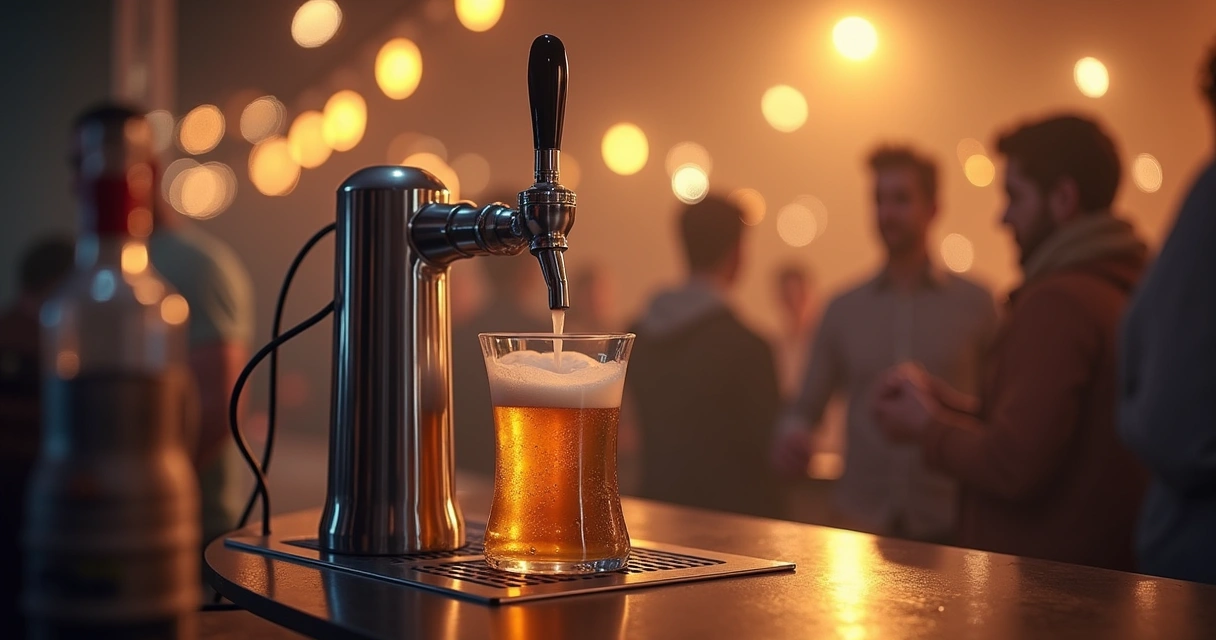
When we picture cold, creamy draft beer coming out at parties or small bars, the classic scene usually involves an electric draft beer dispenser. Easy to transport and quick to set up, it is the number one choice for mobile situations or low-volume service.
The main characteristic of the electric draft beer dispenser is its cooling system. The beer, usually coming from a keg that has already been chilled, runs through an internal coil immersed in an ice bath or in direct contact with electronic cooling elements. Flow capacity usually ranges from 30 to 200 liters per hour, and while more robust models handle high demand, they generally fall in the lower ranges.
But there is a detail that is easy to forget:
- Kegs must always be chilled, because the system only “finishes” cooling the beverage.
- Avoid exposure to the sun or proximity to heat sources, as this changes the quality of the beer served.
- Check that the venue’s electrical system can support the equipment (a grounded outlet is mandatory!).
It is a low-initial-investment solution and relatively easy to clean, but the temperature can fluctuate depending on how much beer is poured at once. For more details, I recommend the article on types of draft beer dispensers.
 Cold room: volume, control, and consistency
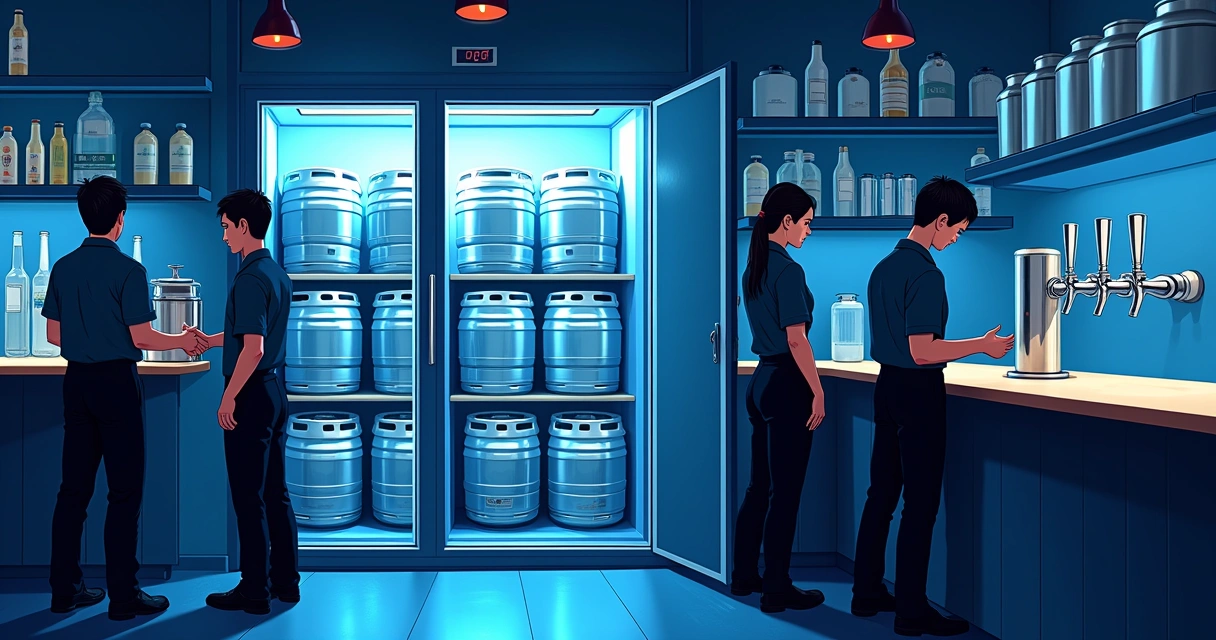
As the volume of draft beer served increases, especially in bars, restaurants, or large events, the cold room becomes more and more attractive. Here we are talking about a custom refrigerated space, able to store not only several kegs of draft beer but also other beverages (such as wine, soft drinks, or craft beer). It is a somewhat different scenario from that of the portable electric draft beer dispenser.
Among the main points of the cold room:
- Adjustable temperature, normally between 0ºC and 4ºC (32ºF to 39ºF), to preserve draft beer and other products.
- It can be custom built, adapting to the space and demand of the establishment.
- It allows the installation of several taps and lines, serving different types of draft beer at the same time.
- Less temperature variation and reduced losses: the beer holds a consistent standard from the start to the end of the keg.
- A good solution for integrating smart self-pour systems, as in the case of myTapp.
The investment is higher, both to set up and to maintain, but the standardization and control make up for it. Especially if you see your bar as a place that wants to build customer loyalty and stand out for its service, the cold room makes a difference.
Refrigerated counter: practical, with limits
Another alternative, mainly for smaller venues, is the refrigerated counter. The concept is simple: it is a (usually) stainless steel cabinet with refrigerated bars inside where the kegs are placed. It is similar to an elongated minibar, adapted to serve draft beer straight from the taps positioned above.
Among the benefits:
- Easy, quick installation, with no major construction work.
- It can hold two or three kegs (depending on the model and size).
- Constant refrigeration, similar to a cold room, as long as the equipment is sized correctly.
However, it requires care with inventory and beverage rotation. Space is limited and, if volume is higher than expected, restocking can be frequent. For small bars, it works well, as long as you pay attention to temperature controls and line cleaning. By the way, have you read how to clean a draft beer line? I recommend it.
 Kegerator: the compact, practical solution
If you are looking for an option that combines convenience and efficiency, the kegerator may be the ideal choice. It is a refrigerator specially adapted (or factory designed) to store one to three kegs, equipped with two or three taps on top, offering a simple and effective way to serve draft beer.
Here are the main characteristics of the kegerator:
- Affordable cost, especially compared with cold rooms or larger counters.
- Good mobility: many models have casters, which makes them easy to transport.
- Simple installation, ideal for newcomers to the industry.
- Reduced storage capacity, usually with just one or two taps.
Ideal as a second point of sale in a bar, for private events, parties, tastings, or establishments with low sales volume. To learn more about choosing the right kegerator for your needs, go to this link.
Comparing the systems: practical points
As helpful as lists are, the real-world scenario often requires mixing factors. To decide on one of the systems, it is worth considering four main points:
- Layout and available space: small establishments usually opt for counters or kegerators; large operations bet on a cold room.
- Mobility: temporary events benefit from an electric draft beer dispenser, while permanent projects call for more robust solutions.
- Cooling consistency: the cold room keeps the beer consistent from start to finish; an electric draft beer dispenser may fluctuate after long periods of continuous pouring.
- Cost and cleaning: kegerators cost less but require frequent cleaning; cold rooms take more preparation but pay off in daily operation.
Another factor that weighs in: the type of tap used on the beer line. An unsuitable tap can completely undermine the work of the best refrigeration system. To learn more, take a look at which is the best tap for a draft beer dispenser.
And how do you adjust the pressure correctly? That question always comes up. If you want to go deeper, I recommend the article draft beer extraction pressure: mystery solved.
Scenarios and choices: it depends on who you want to be
Never underestimate the weight of your business’s purpose. If the goal is to serve large volumes, with consistent standards and multiple types of draft beer, the cold room stands out. Now, if it is just a one-off event or a low-traffic space, an electric draft beer dispenser or kegerator may be enough.
Each type of system has its audience, and its own right way to shine.
In this landscape of choices, projects like myTapp emerge as allies to turn self-pour into a real experience. By integrating smart systems, it is possible to manage the taps, offer rankings, promote engagement, and make life easier not only for end customers but also for the owners of the establishments.
The ideal choice: cold room, kegerator, and myTapp technology for standout experiences
If your goal is to offer exceptional variety and quality in the draft beer you serve, the cold room is the definitive solution. With capacity to support a larger number of taps, it lets you offer different types of draft beer at the same time, ensuring a diverse and consistent experience for customers. In addition, the versatility of this system makes it easier to integrate with digital solutions, such as those offered by myTapp, which allows full control of the taps, with release systems that follow the customer’s operating model. This ensures that every glass is served at the ideal point, from the first to the last.
On the other hand, if your demand involves temporary events or the need for mobility at a new point of sale, the kegerator stands out. This compact equipment is ideal for those who want convenience and efficiency, letting you serve draft beer easily and quickly without giving up quality. The self-pour experience becomes more dynamic and interactive, attracting customers who want a one-of-a-kind experience.
I invite you to explore more about innovations in self-pour draft beer and management tools for bars. On the myTapp blog, you will find a wealth of information on technology, operations, and trends in the draft beer world. If you are curious to see it all working in practice, get in touch with us. We will be glad to show you how we are transforming the way draft beer is sold into a simple, smart, and efficient experience for you too.
Subscribe
Subscribe to the myTapp newsletter and get first access to new articles, with actionable insights for those who decide, plan, and run high-traffic businesses.
Recommended posts
Selected content to explore topics such as self-pour beer, customer experience, and operational efficiency, with practical lessons for decision-makers and those who follow market developments.
Capital Moto Week case study: how self-pour beer scaled the operation at a festival of 800,000 people
At the largest motorcycle and rock festival in Latin America, with about 800,000 people over ten days, self-pour beer kept pace with the event's growth without losing control. In the 2026 edition, the volume served rose more than 18% and the number of sales grew almost 29%, while operational efficiency went from 89% to 93%. The case shows how smart taps sustain beverage operations when the crowd arrives in waves.

Self-pour beer at parks and resorts: how to end lines and waste
In high season, the bar line is one of the biggest bottlenecks at a park or resort: visitors give up, miss out on the attractions and the operation loses sales. Self-pour beer ends the wait, cuts beverage service staff by up to 80% and reduces waste from about 15% to 3%, with real-time consumption data for management.
Self-pour draft beer for events: how to end the lines and sell more at festivals
At a festival's peak, the bar line is where revenue slips away. Self-pour draft beer ends the wait, cuts service staff by up to 80% and reduces waste from about 15% to 3%. With real-time consumption data, the operation decides on the spot and sells more at the moment that matters most.

Receive regular updates on new products and industry trends.