
Craft beer market: how to enter this niche and sell a lot

Working with a new product niche inside an establishment, or even opening a business focused on one sector, requires analysis and planning. In the world of draft beer andcraft beer, some points can go unnoticed, especially by those in the early stage of organizing their ideas.
To start preparing your sales structure, a few items should be thought through and discussed with your team, such as:
Choose a good refrigeration system
Choosing the refrigeration system for your draft beer and craft beer can represent a big change in your establishment. Some key factors to analyze in this process are:
- available space;
- number of taps you want to work with;
- investment you can make.
A system that does not match your reality and/or the experience you want to deliver to your customers can directly affect your profitability. And it can be decisive for your success in the craft beer market.
Variety and number of taps
The variety of styles sold is an unknown for many businesses and, of course, always depends on your audience. For reasons of turnover and variety, it is useful to list which styles will never leave your taps, for example. With that list in hand, it is always a good idea to leave an extra number of taps for tests and other drinks.
Some bars that offer draft beer and craft beer, try to serve something for every taste. Places like that have a large number of taps, usually 50 and up. This sea of options can even be intimidating for a customer who is not a draft beer expert when choosing what to drink.
For bars with a smaller draft beer lineup, with one or two dozen taps, the ideal is to focus on choosing options that truly deserve to be there, that is, options that will be profitable and much appreciated by customers. Here, everything has to be well chosen.
Putting together a beer list follows the same process, regardless of whether you are trying to fill 10 taps or 50. Of course, having fewer taps is a bit more challenging, but it is also possible to make the right choices.
At the same time, it is challenging to create the ideal tap menu, because you need to take into account variables related to the size of the bar, sales volume and customer base. And there is also the fact that some beers are subject to regional availability and personal preference. However, with a few golden tips everything gets easier. Click here to access more tips.
Glass standards and serving sizes
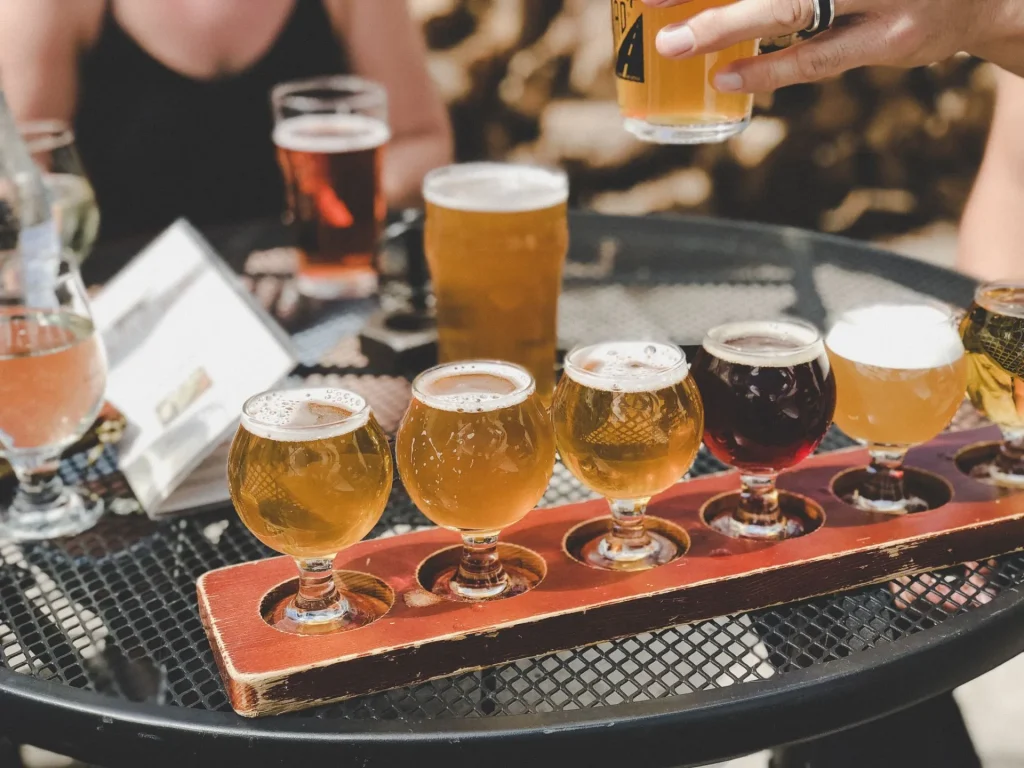
Anyone who works with bars or is even used to visiting establishments that deal in the sale of draft beer and craft beer, can picture in advance some of the more traditional quantities for selling the drink from a keg.
Glasses of around 300 and 500 milliliters are the most common, although other formats have been gaining favor in some establishments. Glasses of 100 milliliters, for example, became popular at beer festivals to replace the famous “little taste.” Besides these, the tasting flight paddle has also gained prominence in recent years.
Those who work with the freedom of self-pour draft beer can let their customers choose the amount they want! This way, you are free to focus on the variety of draft beers at your bar!
Train your team
This is one of the most important parts: it is essential that your employees have qualified knowledge about the products they are selling; in this case, craft beer.
The world of beers that depart from the commercial standard is growing daily and is increasingly popular. However, the different families and styles are still a mystery to many people. Especially for those entering this culture, but also for those already in it, having a qualified staff to share knowledge with the public is fundamental to making your establishment a success.
Draft beer dispensing
Did you know that up to approximately 27% of a keg is wasted? One of the causes of this high number is the search for the perfect head! That is why it is essential to have your draft beer line well aligned.
The correct temperature of the cold room and a well-adjusted flow prevent excess foam, helping the dispensing process. This makes it so easy that even your customer will be able to pour perfectly. In addition, the 45º angle is a great help to avoid waste and ensure a perfect pour!
So, ready to sell draft beer and ensure the best experience for your customers? These were just some of the tips, which can be found in full (along with a complete checklist of the equipment needed to work with draft beer) in the ebook below!
[Free ebook] How to work with draft beer?
Want to learn more about myTapp and how we can bring the technology to your establishment? Request a contact!
Subscribe
Subscribe to the myTapp newsletter and get first access to new articles, with actionable insights for those who decide, plan, and run high-traffic businesses.
Recommended posts
Selected content to explore topics such as self-pour beer, customer experience, and operational efficiency, with practical lessons for decision-makers and those who follow market developments.
Capital Moto Week case study: how self-pour beer scaled the operation at a festival of 800,000 people
At the largest motorcycle and rock festival in Latin America, with about 800,000 people over ten days, self-pour beer kept pace with the event's growth without losing control. In the 2026 edition, the volume served rose more than 18% and the number of sales grew almost 29%, while operational efficiency went from 89% to 93%. The case shows how smart taps sustain beverage operations when the crowd arrives in waves.

Self-pour beer at parks and resorts: how to end lines and waste
In high season, the bar line is one of the biggest bottlenecks at a park or resort: visitors give up, miss out on the attractions and the operation loses sales. Self-pour beer ends the wait, cuts beverage service staff by up to 80% and reduces waste from about 15% to 3%, with real-time consumption data for management.
Self-pour draft beer for events: how to end the lines and sell more at festivals
At a festival's peak, the bar line is where revenue slips away. Self-pour draft beer ends the wait, cuts service staff by up to 80% and reduces waste from about 15% to 3%. With real-time consumption data, the operation decides on the spot and sells more at the moment that matters most.

Receive regular updates on new products and industry trends.