
Craft beer vs. mass-produced beer: what is the difference?

Today's post was written with you in mind, if you want to know more about the beer world and learn a bit more about the particularities of different types of beer! Shall we look at the differences between craft beer and mass-produced beer?
Is craft beer the same as all the others?
Everybody likes beer, but the point is: not all beers are the same. While it is true that all beers share 4 basic ingredients: water, hops, malt and yeast, there is a big difference between craft and mass-produced beers. At first glance, you could say craft beer is art and exclusivity.
Craft beer is the result of a brewmaster's desire. That is why in the craft beer world you can play with your imagination, something that does not happen with conventional beer, whose goal is to produce thousands of liters to increase profits. In addition, there are other factors that make up the main differences between craft and mass-produced beer!
Production
As the names themselves suggest, the purpose of each beer is in its name. This means that commercial beer is made to sell, while craft beer comes from a more sophisticated process, something that can even be called art.
The commercial beer has a much broader audience than craft-made beers; these are brands that aim to reach great popularity. And to sell a lot, you make a lot. And to make a lot, some processes (such as fermentation and maturation) have to be sped up through the use of chemicals, which ends up lowering production costs and, consequently, the price for the end consumer.
The craft beer, on the other hand, has a production aimed at an audience that wants to experience beer in a different way, with an interest in the many types of beer and their particularities, flavors and aromas. The ingredients used to make these beers are more carefully selected and designed for a fermentation process, as well as maturation, without the presence of chemicals to speed up any stage of the process, which results, in the end, in a somewhat more expensive final product.
At the end of maturation, the beer is filtered. This means that when the product is practically ready, it goes through filtration, where all the traces of hops and yeast floating in the liquid are “sifted” out, leaving only the liquid we know. The process also serves to reduce the haziness of the drink, giving it the clarity we know.
This process is done in both types of beer, but it is natural to notice residue in craft-made beers. That happens because the beer is filtered fewer times (some craft beers are not even filtered), while commercial beer goes through the same process more intensively. You can easily tell when a beer is heavily filtered by its turbidity: the clearer the drink, the more filtered it was.
Ingredients
Craft beer is made with care. And as for raw materials, they must go through a rigorous selection process before becoming part of the beer-making process.
The human factor
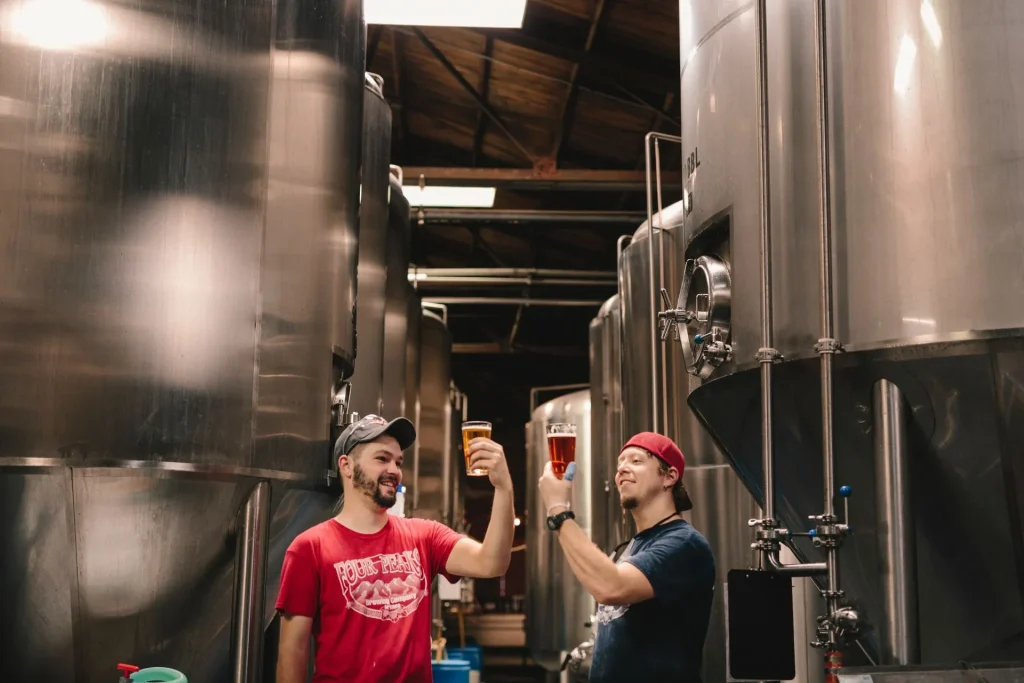
Large beer producers have giant beer factories that produce tons of liters. A fully automated process that has nothing to do with craft beer, which is made in so-called "microbreweries". These are small places. For that reason, the human factor is essential for carrying out and controlling the making of craft beer.
Aroma and flavor
You do not need to be an expert to tell, in two identical glasses, which is the craft beer and which is the mass-produced one. In fact, craft beer has more distinctive colors and more body. Although the biggest difference is the flavor and aroma: in craft beers, the aromas are intense and the flavors are well defined. That is why more and more consumers value craft beer tastings and product quality. And not only that, but from a health standpoint, a craft beer multiplies the nutrients that a mass-produced beer can offer.
[Free eBook] The craft beer market in Brazil
Craft beer and self-pour draft beer
We mentioned earlier the issue of price in relation to craft beers, which ends up being a barrier for many people to try these new flavors. With the democratization of craft beer in mind, we at myTapp built a solution.
Breweries, tap houses, restaurants, bars and other establishments that work with craft draft beer on our self-pour system, you can easily try any draft beer you want, in any amount you want, without the risk of paying a lot for something that may not suit your palate!
With an accurate count of our taps, you can drink only what you want to drink without being tied to standard 300 ml or 500 ml glasses. Saving money and trying all the types of craft beer available.
We hope this information has been useful to you, whether you are standing at the market shelf or in a self-pour establishment wondering “where do I tap my card?”. In the end, what matters is drinking whatever pleases you most, with no judgment!
Want to learn more about myTapp and how we can bring technology to your establishment? Request a contact!
Subscribe
Subscribe to the myTapp newsletter and get first access to new articles, with actionable insights for those who decide, plan, and run high-traffic businesses.
Recommended posts
Selected content to explore topics such as self-pour beer, customer experience, and operational efficiency, with practical lessons for decision-makers and those who follow market developments.
Capital Moto Week case study: how self-pour beer scaled the operation at a festival of 800,000 people
At the largest motorcycle and rock festival in Latin America, with about 800,000 people over ten days, self-pour beer kept pace with the event's growth without losing control. In the 2026 edition, the volume served rose more than 18% and the number of sales grew almost 29%, while operational efficiency went from 89% to 93%. The case shows how smart taps sustain beverage operations when the crowd arrives in waves.

Self-pour beer at parks and resorts: how to end lines and waste
In high season, the bar line is one of the biggest bottlenecks at a park or resort: visitors give up, miss out on the attractions and the operation loses sales. Self-pour beer ends the wait, cuts beverage service staff by up to 80% and reduces waste from about 15% to 3%, with real-time consumption data for management.
Self-pour draft beer for events: how to end the lines and sell more at festivals
At a festival's peak, the bar line is where revenue slips away. Self-pour draft beer ends the wait, cuts service staff by up to 80% and reduces waste from about 15% to 3%. With real-time consumption data, the operation decides on the spot and sells more at the moment that matters most.

Receive regular updates on new products and industry trends.