
Self-pour beer: how to plan your bar for self-pour
In several of our materials you have probably noticed how self-pour beer creates unique experiences and advantages for both customers and bar owners, and we even made an e-book comparing the traditional bar model with the self-pour model, which you can check out here.
[Free eBook] Traditional Bar vs. Self-Pour
This time, our tips are for those who have already decided to turn their bar into a self-pour beer venue and are wondering: so, now what, how do I plan my bar for self-pour? Rest assured, we will clear that up right now!
Decide where the draft beer line will be installed
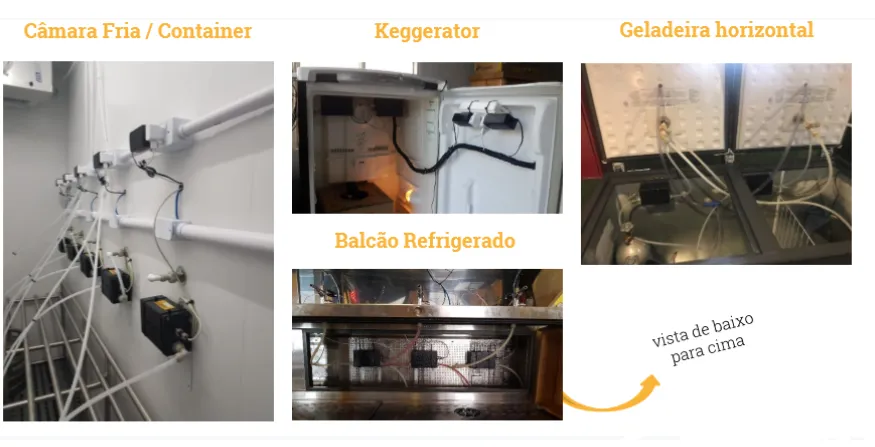
The first thing you must decide is the structure where the draft beer line will be installed. The most common option is the walk-in cooler, and it is also the easiest to maintain thanks to the larger space, which lets every item in the line be installed in a more organized and, therefore, more accessible way.
In addition, using a walk-in cooler is the most efficient way to keep keg temperature under control. However, if your space is small and cannot fit a walk-in cooler, don't worry. You can also install on refrigerated counters, kegerators and electric draft beer dispensers.
We suggest using walk-in coolers, with all the advantages that come with them. The advantages of using a walk-in cooler for draft beer kegs revolve mainly around convenience, flexibility and operating cost. They are also available in different styles and models.
They are considered one of the best options for keeping your drinks cold. This is because they are so advanced. Most models are energy efficient and are the perfect choice for anyone who wants to save money on the electric bill.
Choose the taps
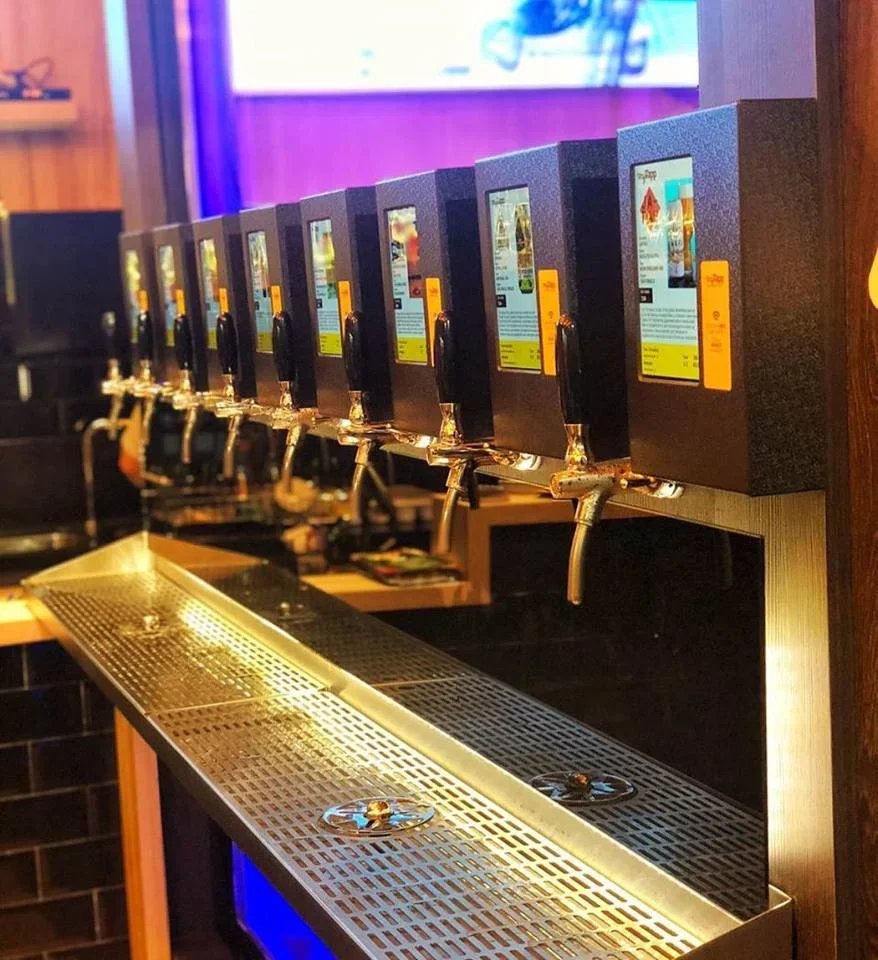
After defining where your draft beer line will be installed, you need to choose the taps. There is no denying that taps are a key element, since they are where the customer gets access to the beer.
With that in mind, the ideal is for the taps to be truly accessible to everyone and located at a focal point of your venue. So it's a good idea to plan a larger space for them, without tables too close by or screens that could be blocked by the heavy flow of people passing through that area.
If you are still unsure about the ideal tap model, I recommend our article that compares Italian taps with Belgian taps to help you make the best decision!
If you want quality and speed when serving draft beer, the Italian tap may be ideal for you. If you want to work with self-pour beer, it is also a perfect fit, since there are no secrets when it comes to pouring and the beer comes out well served, even when a customer is pouring for the first time. Oh, and of course, it prevents waste, making the customer happy to pay exactly what they poured and making you happy to earn more.
Match everything to the bar's look
Now, putting the last two points together: the most common installation is in a walk-in cooler, so the taps are installed on the outside of the container, on the side accessible to the customer.
But how do you do this in a way that looks good and fits the bar's aesthetic? The walk-in cooler container has a metal enclosure, so if your venue was designed with an industrial style, you're all set, you can keep the container in its original material or paint the outside, and maybe even add graffiti if your bar has a more urban style.
But what if your venue has a more rustic concept, for example? No problem either, you can cover the container with a more natural material, such as wood or decorative brick veneer. Or even use wooden barrels to mount the taps and control modules.
The sky is the limit here, the cooler can be wrapped in panels of various materials, such as Corten steel, MDF, cement board, acrylic, etc.
Have several glass options available
Besides everything we have mentioned, there are other elements that can help you add value to your venue. Have you thought about keeping several types of glasses near the taps and having a small space with a sink attached so customers can choose and wash their own glass? That way you take the experience of self-pour a little further.
Many people come to us thinking that we supply all of these items, but myTapp only automates the draft beer line you already have. We bring the software, the screens and the operating system you will use to manage your bar. Ideally, you should contact us about 4 months before your bar opens.
But of course, this is a shorter explanation, meant only to point you in the right direction on how to plan your bar for self-pour beer. Count on us for more specific and in-depth guidance.
Want to learn more about myTapp and how we can bring technology to your venue? Request a contact!
Subscribe
Subscribe to the myTapp newsletter and get first access to new articles, with actionable insights for those who decide, plan, and run high-traffic businesses.
Recommended posts
Selected content to explore topics such as self-pour beer, customer experience, and operational efficiency, with practical lessons for decision-makers and those who follow market developments.
Capital Moto Week case study: how self-pour beer scaled the operation at a festival of 800,000 people
At the largest motorcycle and rock festival in Latin America, with about 800,000 people over ten days, self-pour beer kept pace with the event's growth without losing control. In the 2026 edition, the volume served rose more than 18% and the number of sales grew almost 29%, while operational efficiency went from 89% to 93%. The case shows how smart taps sustain beverage operations when the crowd arrives in waves.

Self-pour beer at parks and resorts: how to end lines and waste
In high season, the bar line is one of the biggest bottlenecks at a park or resort: visitors give up, miss out on the attractions and the operation loses sales. Self-pour beer ends the wait, cuts beverage service staff by up to 80% and reduces waste from about 15% to 3%, with real-time consumption data for management.
Self-pour draft beer for events: how to end the lines and sell more at festivals
At a festival's peak, the bar line is where revenue slips away. Self-pour draft beer ends the wait, cuts service staff by up to 80% and reduces waste from about 15% to 3%. With real-time consumption data, the operation decides on the spot and sells more at the moment that matters most.

Receive regular updates on new products and industry trends.