
Nünna Brewing: how an Ecuadorian brewery tripled its operation with self-pour beer
Introduction
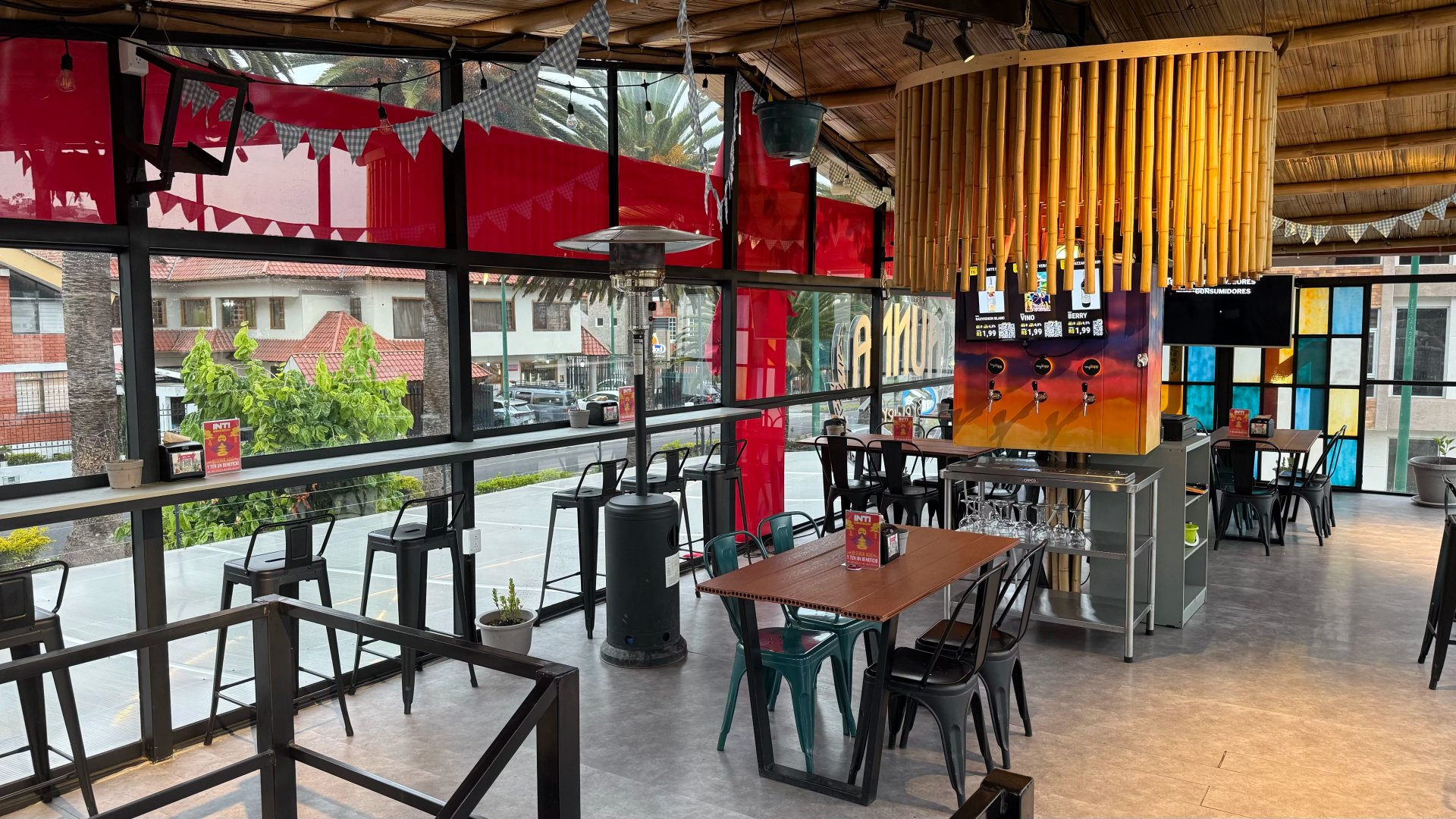
Located in the heart of Ecuador, Nünna Brewing carries its purpose in its name: “Spirit,” from Kichwa. With a concept that combines the new and the traditional, the bar uses organic ingredients from local communities to create an authentic culinary experience.
But how do you keep that “spirit” alive and nimble while the operation triples in size in little more than a year? The answer lies in its partnership with myTapp.
What is a self-pour beer system?
A self-pour system lets customers pour directly from the taps, while flow sensors precisely record the volume consumed and the operator monitors the operation through a control panel.
This model allows for:
- several customers pouring at the same time
- precise control of consumption
- shorter lines at the bar
- greater customer autonomy
What kind of business does this model work for?
Self-pour beer is used mainly by operations that need to serve large volumes of drinks efficiently.
Among the most common cases are:
- taprooms and craft breweries
- gastronomic bars
- resorts and hospitality operations
- festivals and events
The Nünna Brewing challenge
Nünna Brewing was born with a culinary concept that combines contemporary cuisine with organic ingredients from local communities in Ecuador.
The name “Nünna,” derived from the Kichwa language, means “spirit,” reflecting the space's intention to bring together cultural tradition and innovation.
As the bar grew, a clear operational challenge emerged: how to increase the drink offering without creating bottlenecks in service.
The team needed a solution that would allow them to:
- expand the variety of drinks
- keep service fast
- preserve the venue's culinary experience
The solution implemented
The self-pour implementation began in the first half of 2024 using myTapp technology.
The strategy was to validate the model and then scale the operation progressively.
Evolution of the operation
Period | Number of taps | Goal |
|---|---|---|
Early 2024 | 9 taps | Model validation |
September 2024 | 18 taps | Expanding the offering |
June 2025 | 27 taps | Consolidating the beer wall |
Currently, the operation has:
- 18 craft beer taps
- 9 wine taps
- a postpaid model, with a single bill at the end of the experience
This format lets customers explore different drinks without interrupting their experience at the bar.
How the experience works at the bar
At Nünna Brewing, customers receive a card or wristband linked to their account.
The process works as follows:
- The customer activates their NFC card at the bar
- Pours beer or wine directly from the taps
- The system automatically records the volume consumed
Payment is made at the end of the visit, allowing for a smooth experience inside the venue.
Results observed in the operation
Adopting self-pour increased service capacity and improved the dynamics of the space.
Operational indicators
Indicator | Result |
|---|---|
Monthly visits | average of 1,000 customers |
Peak season | up to 2,000 visits |
Active taps | 27 in total |
Impact on the customer experience
Besides improving operational efficiency, the technology also reinforced the bar's culinary positioning.
The system's screens display information about each drink, letting the customer learn about:
- the origin of the ingredients
- the characteristics of the product
- the story behind each label
This model creates a more exploratory experience, in line with Nünna's mission to showcase local ingredients.
Benefits of self-pour for bars and breweries
Based on Nünna Brewing's experience, the main benefits include:
- greater service capacity
- shorter lines at the bar
- greater variety of drinks available
- an interactive customer experience
- operational data on consumption
Frequently asked questions
How does self-pour beer work at a bar?
The customer uses an NFC card or wristband to activate the taps and pour their drink. The system records consumption automatically.
Does self-pour work only for beer?
No. The system can also operate with other drinks served from taps, such as wine or kombucha.
Do you need a large service team?
Not necessarily. Self-pour makes it possible to serve more customers at the same time with a smaller team.
Is it possible to operate with payment at the end?
Yes. Many bars use the postpaid model, in which the customer pays the bill when they finish their experience.
Does the system work at events?
Yes. Self-pour is widely used at events to reduce lines and speed up service.
Conclusion
The Nünna Brewing case shows that culinary tradition and technological innovation can coexist in a hospitality operation.
With self-pour, the bar was able to expand its drink offering, keep service fast and offer a more exploratory experience to its customers.
Today, with 27 active taps and a loyal base of visitors, Nünna positions itself as a benchmark for culinary innovation in the region.
Subscribe
Subscribe to the myTapp newsletter and get first access to new articles, with actionable insights for those who decide, plan, and run high-traffic businesses.
Recommended posts
Selected content to explore topics such as self-pour beer, customer experience, and operational efficiency, with practical lessons for decision-makers and those who follow market developments.
Capital Moto Week case study: how self-pour beer scaled the operation at a festival of 800,000 people
At the largest motorcycle and rock festival in Latin America, with about 800,000 people over ten days, self-pour beer kept pace with the event's growth without losing control. In the 2026 edition, the volume served rose more than 18% and the number of sales grew almost 29%, while operational efficiency went from 89% to 93%. The case shows how smart taps sustain beverage operations when the crowd arrives in waves.

Self-pour beer at parks and resorts: how to end lines and waste
In high season, the bar line is one of the biggest bottlenecks at a park or resort: visitors give up, miss out on the attractions and the operation loses sales. Self-pour beer ends the wait, cuts beverage service staff by up to 80% and reduces waste from about 15% to 3%, with real-time consumption data for management.
Self-pour draft beer for events: how to end the lines and sell more at festivals
At a festival's peak, the bar line is where revenue slips away. Self-pour draft beer ends the wait, cuts service staff by up to 80% and reduces waste from about 15% to 3%. With real-time consumption data, the operation decides on the spot and sells more at the moment that matters most.

Receive regular updates on new products and industry trends.