
Festa do Peão de Barretos: self-pour to scale the bar at large events
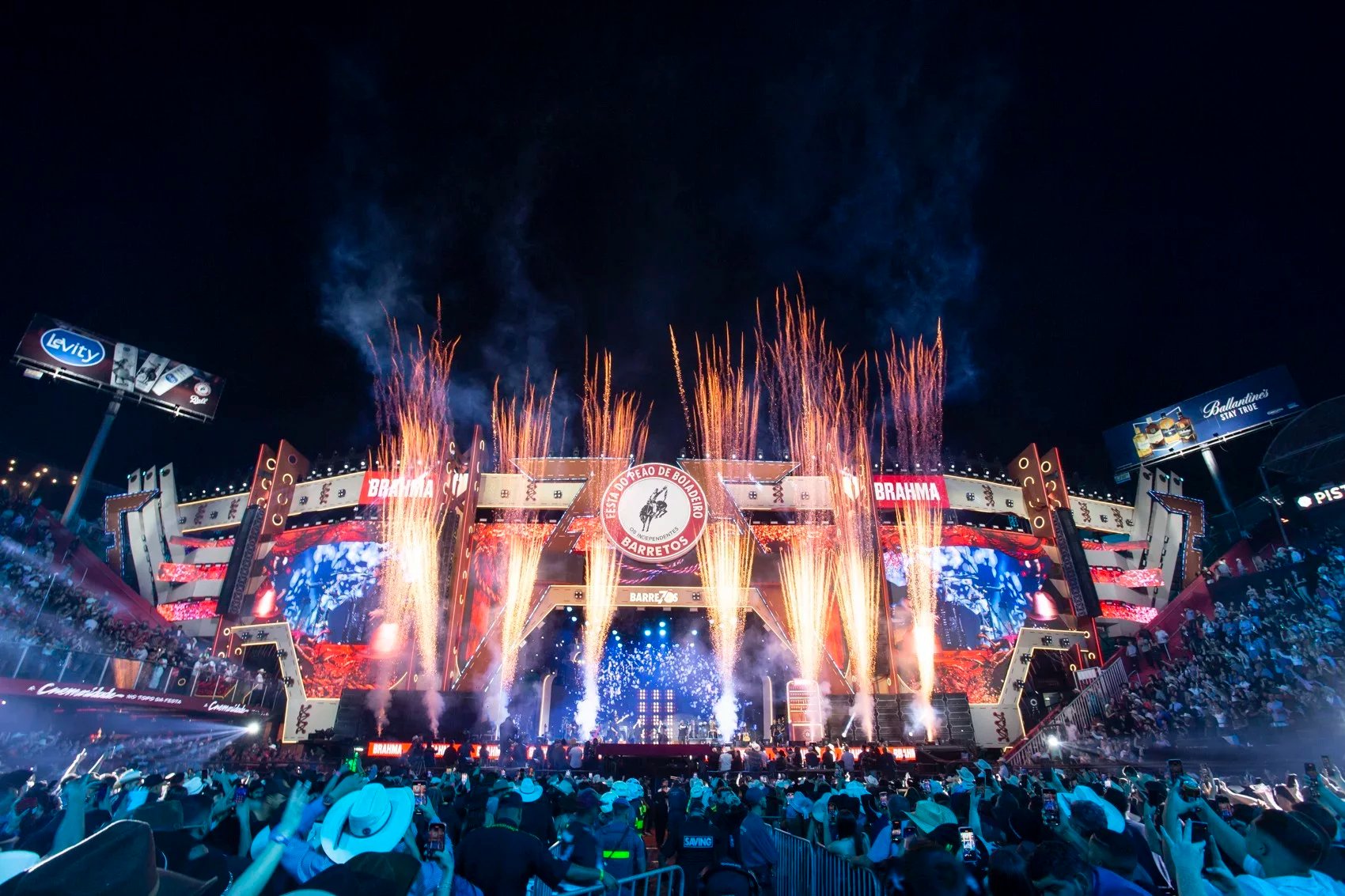
The context: one of the biggest events in the country
The Festa do Peão de Barretos is known all over Brazil, bringing together more than 60,000 people a day in an environment of intense consumption, multiple points of sale and long operating hours.
In this scenario, the bar stops being just a support service and becomes one of the main bottlenecks of the audience experience, as well as one of the event's biggest operational risks.
The challenge: serving at scale without losing control
Before adopting self-pour, the operation faced the typical challenges of large events:
- Constant lines at the bars
- Difficulty training large temporary teams
- Inconsistent pours and service
- High risk of waste
- Little real-time control over consumption
At an event of this size, small inefficiencies multiply quickly.
The solution: self-pour as operational infrastructure
myTapp brought the ideal solution to take on the role of bar infrastructure, not just complementary technology.
With self-pour beer walls, the system made it possible to achieve:
- Pours standardized by volume
- Continuous service even at extreme peaks
- Less reliance on bar staff
- Real-time consumption monitoring
The focus was not only on brand activation, but on operating predictably, even under maximum pressure.
Practical comparison: manual operation vs. self-pour
The difference between the two models was clear in practice:
Traditional operation
- Service limited by the operator's speed
- Lines growing at peak hours
- More variation in the pour
- More waste and rework
myTapp self-pour
- Automatic pour in about 20 to 30 seconds per glass
- Steady flow of service
- Standardized volume
- Real-time control of every point
The result was a bar able to keep up with the pace of the event, without collapsing at moments of highest demand.
Direct impact on the audience experience
For the audience, the impact was immediate:
- Less time in lines
- More time enjoying the event
- Intuitive use of the system
- A sense of flow even in crowded areas
At events of this size, improving the experience does not just mean creating something new, but removing friction. During the event, more than 12,000 liters of draft beerwere served, with no significant lines and with a steady flow even at attendance peaks.
Operational gains for the organization
From the standpoint of event production and management, the gains were clear:
- Less need for large teams at the bar
- More operational predictability
- Reduced waste
- Real-time visibility into consumption
- Data-driven decision making
Self-pour came to work as a distributed control system, essential for large-scale events.
What event producers can learn from Barretos
The Festa do Peão de Barretos case offers important lessons:
- Scale demands standardization and predictability
- Self-pour is a logistics solution, not just an experience one
- Reducing lines has a direct impact on how the event is perceived
- Real-time control is decisive in complex operations
- Well-applied technology reduces operational risk
At large events, efficiency is part of the experience, even when the audience doesn't consciously notice it.
FAQ — Frequently asked questions about self-pour at large events
Does self-pour work at events with massive crowds?
Yes. The model was designed precisely to handle demand peaks.
Is it possible to operate with smaller teams?
Yes. Self-pour reduces the need for large teams dedicated solely to the bar.
Can the system handle long periods of operation?
Yes. The solution has been used at multi-day, high-intensity events.
Does the audience understand how to use it?
Yes. The experience is intuitive, even for those who have never used it before.
Does it only work for open bar?
No. It can be used in paid or hybrid models.
Subscribe
Subscribe to the myTapp newsletter and get first access to new articles, with actionable insights for those who decide, plan, and run high-traffic businesses.
Recommended posts
Selected content to explore topics such as self-pour beer, customer experience, and operational efficiency, with practical lessons for decision-makers and those who follow market developments.
Alta temporada em resorts: como aumentar a receita dos bares e evitar perdas na operação
Alimentos e bebidas respondem por 20% a 30% da receita de um hotel, segundo o CPT (Centro de Produções Técnicas), e no resort o bar é o ponto que mais concentra consumo ao longo do dia. Na alta temporada, essa receita escapa por quatro caminhos: venda que não acontece por falta de atendimento, equipe sazonal cara, desperdício e consumo sem registro no all inclusive. Medir cada um deles é o primeiro passo para recuperar margem.

Quantos copos rende um barril de chopp?
No papel, um barril de 50 litros rende 166 copos de 300 ml. Na prática do serviço manual, a perda de cerca de 15% derruba esse número para perto de 141, o que significa 25 copos pagos e nunca vendidos em cada barril. Entender onde esse chopp se perde é o primeiro passo para proteger a margem do bar.
Quantidade de chopp por pessoa: como calcular o volume do seu evento sem faltar nem sobrar
A regra de bolso de 1,5 a 2 litros de chopp por pessoa funciona para festas, mas erra em eventos maiores. A conta certa considera duração, calor, perfil do público e a perda no serviço, que no modelo manual chega a 15% do barril. Num evento de mil pessoas, só essa perda pode significar cinco barris de 50 litros a mais na compra.

Receive regular updates on new products and industry trends.