
Acquamotion: how mobile self-pour stations scaled consumption at an indoor water park
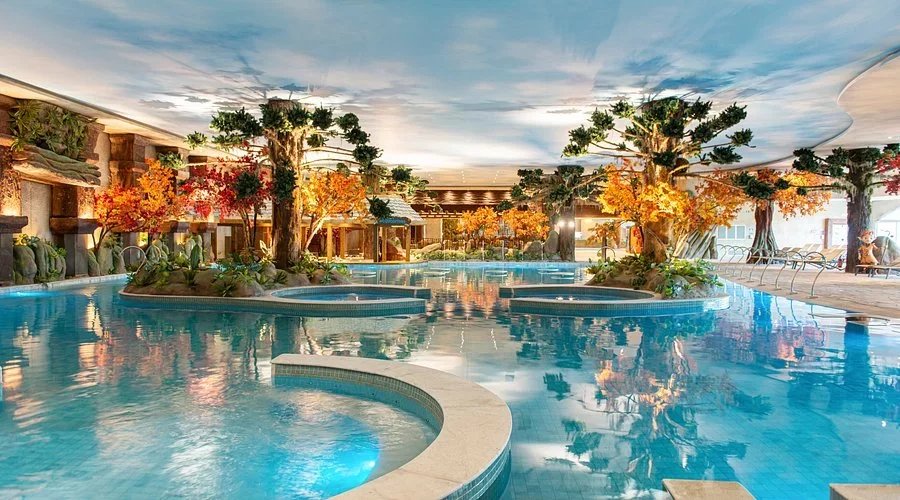
The context: an indoor water park and concentrated consumption
Located in Campos do Jordão, Brazil, Acquamotion is an indoor water park focused on family leisure, with a large share of visitors concentrated in short periods of the day. Unlike open, spread-out resorts, the park operates with intense demand peaks, especially around the pools and rest areas.
In this setting, traditional bars quickly become bottlenecks: lines grow, the experience deteriorates and part of the consumption simply never happens.
The challenge: speed, staff and lines
Before adopting self-pour, the operation faced challenges common to water parks:
- A large volume of orders in short windows
- Frequent lines at fixed bar locations
- Difficulty scaling service with staff
- High operating cost to cover peaks
- Lost sales when customers give up waiting
In parks, every minute of waiting reduces leisure time and directly affects how visitors perceive the experience.
The solution: mobile stations as points of sale
The strategy was clear: bring consumption to the customer, instead of concentrating it in a few fixed bars.
myTapp was implemented with mobile self-pour stations, allowing:
- Quick creation of new points of sale
- Plug-and-play operation, with no construction work
- Mobility to adjust locations according to traffic
- Direct service in areas where guests spend the most time
The model shortened the distance between the customer and the product, increasing conversion without adding complexity.
How it worked in practice
The mobile stations were placed strategically in areas of high traffic and long stays. Using them is simple:
- The customer goes to the station
- Activates it using the configured method
- The pour is automatic and standardized
- Consumption is recorded in real time
The operation stays stable even at peak times, with an average pour time of 20 to 30 seconds per cup.
Data that supports decisions
Even with a compact setup, the numbers show a significant impact:
- Self-pour cart:
- Average of 2,000 liters/month
- New points of sale created without dedicated staff
- Direct reduction of lines in critical areas
- Full control of volume and inventory
Self-pour went from being just a convenience to a distributed revenue lever.
Direct impact on the visitor experience
For guests, the gains are clear:
- Less walking around the park
- Less time in lines
- Fast, predictable service
- More time enjoying the attractions
In water parks, efficiency is not seen as just technology; it is seen as more leisure.
Operational gains for management
From an operations standpoint, the model brought strategic advantages:
- Less reliance on large teams
- Easy to reposition points of sale
- Scalability for high season
- Decisions based on real consumption data
- Fewer bottlenecks without structural investment
The stations work as smart POS points, adaptable to the park's dynamics.
What other parks can learn from Acquamotion
The Acquamotion case offers clear lessons for decision-makers:
- Mobility is key in high-traffic environments
- Creating more points of sale increases total consumption
- Self-pour reduces lines without compromising the experience
- Plug-and-play operations speed up payback
- Data makes it possible to scale safely
In water parks, growth requires flexibility.
FAQ: Self-pour in water parks
Does self-pour work in wet environments?
Yes. The stations are designed to operate safely in water park areas.
Can the points be moved according to traffic?
Yes. Mobility is one of the model's main differentiators.
Does it reduce the need for staff?
Yes. Especially at quick-service consumption points.
Can the system handle demand peaks?
Yes. The standardized pour keeps traffic moving steadily.
Does it help increase revenue?
Yes. By capturing consumption that used to be lost in lines.
Subscribe
Subscribe to the myTapp newsletter and get first access to new articles, with actionable insights for those who decide, plan, and run high-traffic businesses.
Recommended posts
Selected content to explore topics such as self-pour beer, customer experience, and operational efficiency, with practical lessons for decision-makers and those who follow market developments.
Capital Moto Week case study: how self-pour beer scaled the operation at a festival of 800,000 people
At the largest motorcycle and rock festival in Latin America, with about 800,000 people over ten days, self-pour beer kept pace with the event's growth without losing control. In the 2026 edition, the volume served rose more than 18% and the number of sales grew almost 29%, while operational efficiency went from 89% to 93%. The case shows how smart taps sustain beverage operations when the crowd arrives in waves.

Self-pour beer at parks and resorts: how to end lines and waste
In high season, the bar line is one of the biggest bottlenecks at a park or resort: visitors give up, miss out on the attractions and the operation loses sales. Self-pour beer ends the wait, cuts beverage service staff by up to 80% and reduces waste from about 15% to 3%, with real-time consumption data for management.
Self-pour draft beer for events: how to end the lines and sell more at festivals
At a festival's peak, the bar line is where revenue slips away. Self-pour draft beer ends the wait, cuts service staff by up to 80% and reduces waste from about 15% to 3%. With real-time consumption data, the operation decides on the spot and sells more at the moment that matters most.

Receive regular updates on new products and industry trends.